Can Google Reviews Be Removed? What Actually Qualifies

A single one star review can sit at the top of a Google Business Profile for years. It can shape how a potential customer feels about a company before they even look at the service page or read a description. So it makes sense that business owners want to know one thing above all else. Can a bad review actually be taken down, or is it stuck there forever?
The honest answer is that some reviews can be removed and many cannot. Google does not remove a review just because it is negative, harsh, or unfair sounding. Google removes a review only when it breaks a specific rule written into its content policy. Understanding which rule applies to your situation is the difference between a successful removal request and months of frustration.
This guide walks through exactly what qualifies for removal, what does not, and how the process actually works in practice, based on Google’s official Prohibited and Restricted Content policy for Maps and Business Profiles.
Key Takeaways
- A review can only be removed if it violates a specific Google policy, not simply because it is negative.
- The main removable categories are fake or fabricated reviews, conflict of interest reviews, off topic content, hate speech, harassment, illegal content, personal information, and spam.
- Star ratings without written text can still be flagged if the reviewer never actually visited or used the business.
- Google has tightened enforcement in 2026, including new rules around staff soliciting reviews and AI generated review text.
- Flagging a review does not guarantee removal. Google’s moderation team makes the final call, and it can take anywhere from a day to several weeks.
- A poor response to a legitimate negative review often causes more damage than the review itself.
- Reading the latest Google review guidelines before you flag anything will save you time and prevent wasted reports.
Does Google Actually Remove Reviews
Yes, Google removes reviews every day. According to Google’s own transparency reporting, hundreds of millions of policy violating reviews are blocked or removed across Maps each year. That volume shows the system is active, not theoretical.
What surprises most business owners is how narrow the qualifying reasons actually are. Google built its review system around one core principle. A review should reflect a real experience at a real location, told honestly and without outside influence. Everything Google will or will not remove flows from that single principle.
If a review meets that bar, even if it stings, Google will almost always leave it up. If a review fails that bar, in a way that fits one of Google’s defined categories, it becomes eligible for removal.
The Categories That Actually Qualify For Removal
Google organizes its rules under a policy called Prohibited and Restricted Content. Below are the categories that most commonly lead to a successful takedown.
1. Fake Engagement And Content Not Based On A Real Experience
This is the single most common reason legitimate removal requests succeed. A review qualifies here when the reviewer never actually visited the business, never used the product, or is posting on behalf of someone else without disclosing that.
Signs that often support this claim include a reviewer account with no history at that location, a review describing a service the business does not even offer, or a review posted by someone in a different country who could not plausibly have visited in person.
2. Conflict Of Interest
Google prohibits reviews written by people with a personal or financial stake in the business. This includes owners reviewing their own location, current or former employees, and reviews traded between competing businesses as a favor.
It also covers a business owner posting a glowing review of a direct competitor’s rival, or a public relations agency posting reviews on behalf of a client without disclosure.
3. Off Topic Content
Reviews are supposed to describe an actual experience at a specific location. A review that talks entirely about politics, a news event, a landlord dispute unrelated to the listed business, or a rant about a corporate parent company rather than the specific branch, can qualify as off topic and be removed.
4. Hate Speech, Harassment, And Bullying
Content that attacks a person or group based on a protected characteristic, or that targets a specific employee by name in an abusive or threatening way, falls outside Google’s allowed content and is eligible for removal.
5. Illegal Content
Reviews promoting illegal activity, describing the sale of restricted goods, or linking to unlawful websites are removable. This also covers reviews that threaten violence or reference criminal acts against the business.
6. Sexually Explicit Or Obscene Content
Reviews containing explicit sexual descriptions, graphic language, or obscene imagery attached to a listing violate Google’s content standards and qualify for removal.
7. Personal Information
A reviewer posting someone else’s home address, phone number, medical details, or financial information inside a review can be flagged under Google’s personal and confidential information rule.
8. Impersonation
If a reviewer pretends to be a current or former customer while actually being unaffiliated with the business, or pretends to be a specific real person they are not, that review is removable under impersonation rules.
9. Spam And Advertising
Reviews that exist purely to promote another business, post a link, or advertise unrelated products or services do not qualify as genuine feedback and can be removed as spam.
10. Restricted Content Involving Incentives Or Manipulation
Google has become far stricter here in 2026. Reviews collected through payment, discounts, free products, review gating, on premises pressure, staff quotas, or requests to name a specific employee are now explicitly banned under Google’s Rating Manipulation rules. If a business can show a review was solicited this way, it may support a removal request, although this is usually easier to prove for reviews the business itself controls rather than reviews from an unhappy customer.
What Does Not Qualify For Removal
This section matters just as much as the list above, because most disappointed business owners assume the wrong things are removable.
- A review is factually accurate but embarrassing. Truthful criticism about slow service, a billing mistake, or a bad meal is allowed even if it hurts.
- A review is simply low starred with no written explanation. A one star rating with no text is generally left alone unless there is clear evidence the reviewer never interacted with the business.
- A review uses strong opinion language such as “worst experience of my life” or “never going back.” Google allows subjective opinions, even exaggerated ones, as long as they relate to a real visit.
- A review is old and the business has since improved. Google does not remove reviews for being outdated.
- A review criticizes pricing, wait times, or staff attitude in general terms. Rudeness in tone is not automatically a policy violation.
Comparison Table Removable Versus Non Removable Reviews
| Situation | Typically Removable | Typically Not Removable |
|---|---|---|
| Reviewer never visited the business | Yes | |
| Review is negative but describes a real visit | Yes | |
| Review names an employee with abusive language | Yes | |
| Review criticizes slow service politely | Yes | |
| Review was left by a current employee | Yes | |
| Review contains someone’s home address | Yes | |
| Review says “overpriced and disappointing” | Yes | |
| Review is entirely political commentary | Yes | |
| Review is old and business has since changed | Yes | |
| Review was paid for or incentivized by the business itself | Often flagged during audits |
How The Google Review Removal Process Actually Works
Step One Read The Review Carefully
Before flagging anything, read the review twice and separate opinion from factual claims. Identify exactly which sentence or claim you believe breaks a specific policy rather than reacting to the overall tone.
Step Two Check It Against Google’s Policy Categories
Match the review against the categories above. A removal request has a far better chance of success when you can point to one clear rule rather than a general complaint that the review “isn’t fair.”
Step Three Flag The Review Through Your Business Profile
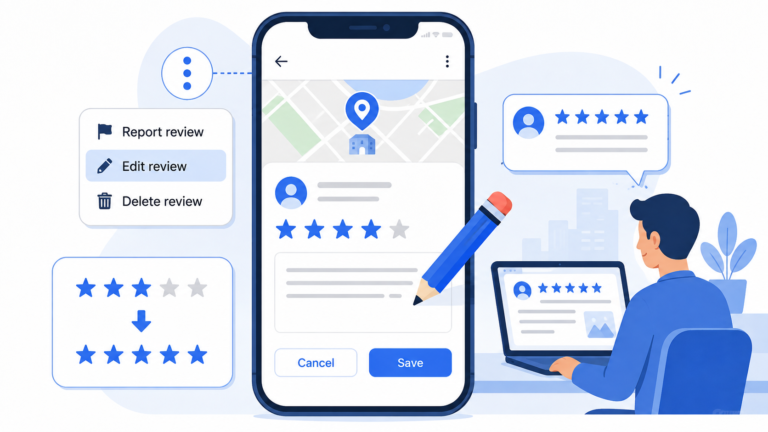
Reviews are reported directly from the Google Business Profile dashboard or through Google Maps by selecting the flag icon and choosing the reason that matches the violation.
Step Four Add Context If Requested
Some flagged reviews prompt a short explanation field. This is the moment to state clearly and calmly why the review fails Google’s policy, referencing specific evidence such as no record of the customer, or language that violates the harassment rule.
Step Five Wait For Google’s Review Team
Straightforward spam or clearly fake accounts are often actioned automatically within a day or two. More nuanced cases involving judgment calls, like conflict of interest or off topic content, typically take longer and may need a manual review.
Step Six Escalate If Necessary
If a flag is rejected and you have strong evidence, escalation through the Google Business Profile Community forum or a documented appeal with screenshots and timestamps can sometimes get a second look from a specialist.
For a full walkthrough with screenshots and exact click paths, see our detailed guide on how to remove a Google review step by step.
Expert Tips For A Stronger Removal Request
- Screenshot everything the moment you see the review. Reviews can be edited or deleted by the original poster, which removes your evidence along with it.
- Keep records that prove non interaction, such as booking systems, point of sale logs, or appointment calendars showing no match for the reviewer’s name or date.
- Avoid arguing tone or fairness in your flag explanation. Cite the specific policy category instead.
- Respond publicly and professionally to the review while your flag is pending. A calm response protects your reputation regardless of the outcome.
- Do not create fake positive reviews to offset a negative one. This violates the same policy you are trying to enforce and puts your entire profile at risk.
Common Mistakes Businesses Make
- Flagging every negative review automatically, which trains Google’s system to see the business as an unreliable reporter and can slow down future legitimate flags.
- Assuming a harsh tone alone is grounds for removal, then submitting a vague report with no reference to an actual policy.
- Waiting too long to gather evidence, by which time the reviewer has deleted their account or edited the content.
- Publicly arguing with the reviewer in the comment section instead of responding factually and moving the conversation offline.
- Ignoring the possibility of legal routes, such as a defamation claim, when a review contains clearly false statements of fact rather than opinion.
Best Practices For Managing Reviews Long Term
- Build a steady, natural flow of reviews so that one bad review has less visual weight against a large honest history.
- Ask every customer for feedback using neutral open ended language, sent after they leave the premises rather than while they are still there.
- Train staff to never request specific wording, star ratings, or personal mentions in a review, since this now falls under Google’s restricted content rules.
- Review your process periodically against the latest Google review guidelines, since Google has updated its policy language multiple times in the past year alone.
- Document your review request workflow internally so you can prove compliance if Google ever questions your review pattern.
Many businesses find it easier to hand this entire workflow to a team that already understands the current policy. That is the reasoning behind our Google review removal process, which is built specifically around what Google’s moderation team actually approves in 2026.
What If The Review Is Removed Then Reposted
Occasionally a removed review reappears under a slightly different account or wording. This does not mean the first removal failed. It usually means a determined reviewer created a new profile. The same flagging process applies again, and repeated abusive behavior from a single source can sometimes be reported as a pattern, which Google’s trust and safety systems weigh more heavily than a single isolated flag.
When A Legal Route Makes More Sense Than Flagging
If a review contains a false statement presented as fact, such as claiming a business was shut down for a health violation that never happened, that can cross into defamation rather than opinion. In cases like this, a formal legal request, sometimes through a court order, can be submitted directly to Google requesting removal based on a legal finding rather than a policy violation. This route is slower and typically requires legal counsel, but it exists specifically for cases where the standard flagging process does not resolve a clearly false and damaging claim.
Conclusion
A Google review only qualifies for removal when it breaks a specific, defined rule. Negative feedback, harsh language, and honest criticism are protected under Google’s policy even when they hurt. Fake reviews, conflict of interest posts, harassment, personal information, spam, and manipulated review activity are the categories that actually get results.
The businesses that handle this well are the ones that separate emotion from policy, gather evidence quickly, and respond to legitimate criticism with professionalism instead of panic. Reviews will keep coming, and understanding exactly what Google will and will not act on is what turns a stressful situation into a manageable one.
Frequently Asked Questions
Can a business owner get a negative review removed just because it is unfair?
No. Google does not remove reviews for being unfair, harsh, or embarrassing. The review must violate a specific policy category such as fake content, harassment, or conflict of interest.
How long does it take Google to remove a review after it is flagged?
Timelines vary. Clear cut spam is often removed within a day or two through automated detection. Cases requiring human judgment, such as conflict of interest claims, can take anywhere from several days to a few weeks.
What happens if Google refuses to remove a review I flagged?
You can respond to the review publicly, gather stronger evidence, and resubmit through the Business Profile Community forum, or explore a legal request if the review contains a clearly false factual claim.
Can a review be removed just because it has no written text, only a star rating?
Rarely. A star only review is usually left alone unless there is solid evidence the reviewer never actually visited or interacted with the business.
Is it against policy for a business to ask customers for reviews?
No. Asking for reviews is allowed and encouraged. What is prohibited is offering incentives, filtering customers by sentiment before asking, pressuring customers while still on the premises, or requesting specific wording.
Can an employee’s review of their own workplace be removed?
Yes. Reviews written by current or former employees about their own employer generally violate the conflict of interest policy and are eligible for removal.
Does responding to a negative review affect whether it gets removed?
Responding does not influence Google’s moderation decision directly, but a calm and factual public response protects the business reputation while a flag is pending or if the review stays up.
Can competitors post fake negative reviews to hurt a business?
Yes, this happens, and it is a clear violation of Google’s fake engagement and conflict of interest rules. These cases often qualify for removal once reported with supporting evidence.
Is there a limit to how many reviews a business can flag?
There is no published fixed limit, but flagging large numbers of reviews without valid policy grounds can reduce Google’s trust in future reports from that profile.
Can a review be removed for using profanity or rude language?
Only if the language crosses into harassment, hate speech, or threats. General rudeness or strong criticism, even if unpleasant to read, usually does not meet the bar for removal on its own.